


On the occasion of the 250th anniversary of U.S. independence, in the congratulatory letter to US President Donald Trump, Azerbaijani President Ilham Aliyev wrote that his country and Armenia live in peace and are establishing trade relations.
It is worth reminding that with the initiative of U.S. President Donald Trump in August of last year, Azerbaijani President Ilham Aliyev and Armenian Prime Minister Nikol Pashinyan signed a Joint Declaration on the initialing of the Agreement on Establishment of Peace and Inter-State Relations between the Republic of Azerbaijan and the Republic of Armenia. Although it is not a final peace treaty, it is considered a crucial breakthrough in ending thirty years of hostility between the two neighboring countries. The 17-clause document, published by the MFAs of both states, covers different aspects of bilateral relations, including mutual recognition of sovereignty and territorial integrity. The most important point is that the sides promised to avoid the use of force and threats against each other’s territorial integrity or political independence.
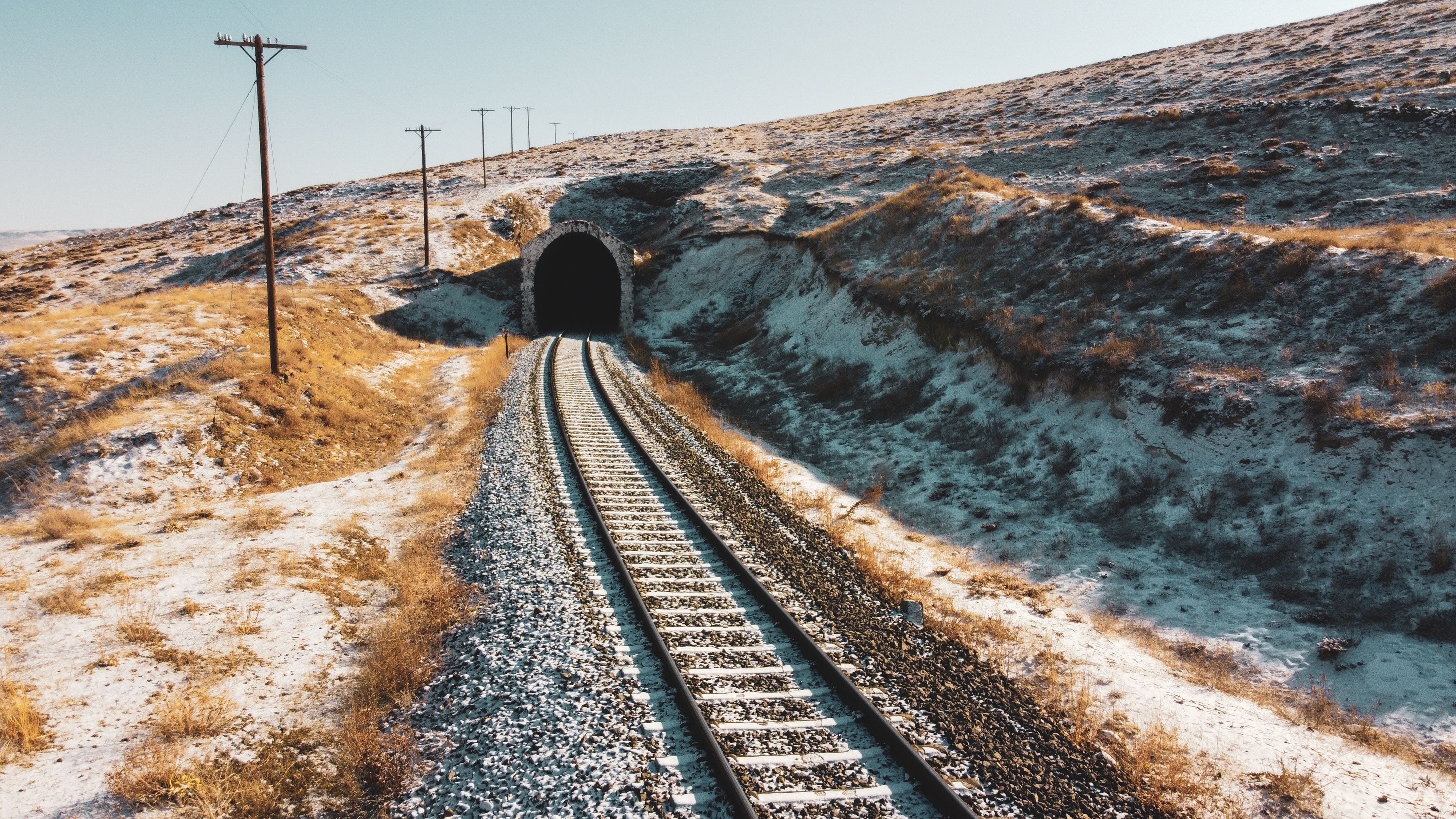
Since last year, the sides have taken economic peacebuilding steps, as well. Today, you can read news in the media that cargo is dispatched through Azerbaijani territory to Armenia, which was unimaginable a few years ago. Russia and Kazakhstan regularly send transit cargo to Armenia via the Azerbaijani railway network. This cross-border transit has been active since Baku lifted restrictions on cargo transport to Armenia. Azerbaijan also exports to Armenia, primarily petroleum products like diesel fuel, AI-92 gasoline, and AI-95 gasoline, as well as small quantities of plastic construction materials. According to the State Customs Committee of the country, in January-June 2026, the value of Azerbaijan’s exports to Armenia was $17,128,600. In March this year, Azerbaijani customs statistics also recorded $960 in indirect imports from Armenia in March. The goods, however, were Dutch-origin roses transported via Armenia, rather than Armenian exports to Azerbaijan. The volume is negligible, but the transaction may nevertheless point to a gradual shift away from the decades-long pattern of economic isolation and non-recognition.
Back when I was working as a political journalist, during my off-the-record discussions with European diplomats, they always spoke about the European Union as a comparative model, emphasizing how economic integration contributed to cooling down the long-standing interstate rivalries on the European continent. This analogy, while analytically imperfect considering the significantly different institutional and historical contexts, underlines a fundamental proposition in the liberal peace literature: economic interdependence changes cost-benefit calculations in ways that render peaceful solutions more attractive than armed conflict. It must be noted, however, that economic cooperation does not eliminate fundamental disagreements; rather, it reframes why and how nations choose to overcome them.
Azerbaijan’s position: Peace initiatives with maximalist rhetoric
The Azerbaijani government has formally endorsed the peace agenda and presents itself as committed to lasting normalization with Armenia.
In his speeches, Azerbaijani President Aliyev emphasizes that Yerevan has no reason to fear and that there is no need for external forces to “protect” Armenia from Azerbaijan, because Baku does not intend to destroy Armenian statehood or undermine its independence.
Although Baku’s positive rhetoric regarding the peace process sometimes sounds paradoxical, given the coexistence of official negotiations and ultimatums. Yerevan-based political experts argue that Azerbaijan uses designations such as the “Zangezur Corridor” or “Western Azerbaijan” to maintain pressure on Armenia.
As for the explanation of these terms, first let’s start with “Zangezur Corridor,” which has been one of the most disputed issues in post-war Azerbaijani-Armenian relations. It is a transit route that would connect mainland Azerbaijan with its exclave Nakhichevan, passing through Armenian territory.
Before the trilateral meeting in Washington, Azerbaijan had insisted that Armenia should not have authority over this route. While agreeing in principle to provide this connection, Yerevan refused to relinquish its sovereign authority over its own territory. At a Washington meeting last year, a new agreement was reached regarding this transit route, which was mentioned in a joint declaration by the leaders of Armenia, Azerbaijan, and the US. According to this declaration, Armenia agreed to work with Washington and mutually determined third parties to establish a framework for this route. The route was formally named the “Trump Route for International Peace and Prosperity” (TRIPP), with a projected role as a mechanism for stability and economic cooperation. On July 16th, the Armenian government announced that it approved the draft law on the ratification of the Framework Agreement on Strategic Cooperation between Armenia and the US concerning the TRIPP project. Armenian Foreign Minister Ararat Mirzoyan stated that the draft will be submitted to the Constitutional Court and, should the Court find the obligations stipulated in the agreement to be consistent with the Constitution, it will then be submitted to the National Assembly.
Under the arrangement, a newly established joint venture will handle a railway, highway, energy lines and other infrastructure along the route for a minimum of 49 years. The US government will control 74% of the Trump Route Development Company, which will be granted special land-use, development and operational rights necessary to govern the project. At the same time, the Armenian Ministry of Foreign Affairs emphasized in an official release that the state retains full sovereignty and jurisdiction over the project area, including responsibility for border control, customs, taxation, law enforcement and security.
Regarding the “Western Azerbaijan” discourse, this narrative considers the return of Azerbaijanis to “Western Azerbaijan,” referring to the Armenian territories. President Aliyev has several times raised the issue of “returning Azerbaijanis forcibly expelled from Armenia.” In Armenia, such statements from Baku always provoke a strong reaction. This discourse plays a double role: on the one hand, it expands the psychological impact of military victories; on the other, it gives extra bargaining power in peace negotiations.
As a response to this discourse, even Armenian Prime Minister Pashinyan proposed a joint roadmap freezing both sensitive return claims, meaning that Karabakh Armenians displaced in 2023 would relinquish returning to Karabakh, while Azerbaijanis deported in the late 1980s would relinquish returning to Armenia.
The relationship between the “Western Azerbaijan” narrative and actual Azerbaijani territorial ambition is analytically complex. Even if the narrative is presented as historical justice-seeking by Baku, the international legal context constrains its operationalization through military means. During the 2020-2023 Karabakh conflict, the global community refrained from challenging Baku’s restoration of territorial control, largely because the territories are internationally recognized as Azerbaijani; yet, states and international organizations intervened on humanitarian and human rights grounds, demanding civilian protection, and calling for unimpeded humanitarian access. The territory of the Republic of Armenia, by contrast, is internationally recognized as Armenian sovereign territory. Any violent measure directed at this territory would be classified as occupation or aggression, with diplomatic, legal, and potentially economic repercussions for Azerbaijan. Nevertheless, Armenian concerns remain about whether legal distinctions and potential international repercussions will automatically prevent military escalation.
Consequently, the “Western Azerbaijan” narrative does not in itself demonstrate the existence of an operational plan to seize Armenian territory. Yet its coercive and psychological effect is considerable: by deliberately blurring the distinction between historical memory, refugee claims, and contemporary sovereignty, it reinforces Armenian security fears and weakens the credibility of Baku’s commitment to peace and territorial inviolability.
Armenia - Change in foreign policy with domestic constraints
Change in the region’s status quo since 2020 has had a direct impact on Armenia’s foreign policy. After the 2020 war, Armenia was disappointed with traditional Russian security guarantees, and this disappointment catalyzed a shift toward a multi-vector foreign policy, characterized by the pursuit of new security and economic partnerships. Russia’s credibility as a security guarantor has diminished substantially in Yerevan’s strategic calculus. Second, the Russian invasion of Ukraine has reinforced Armenia’s reason to reduce economic and political reliance on Moscow.
Despite all these developments, Russia’s influence has not been eliminated. The Kremlin still retains a military base (in Gyumri) in the country and remains a significant trade partner for Armenia. During the parliamentary elections of June 2026, the Armenian government faced mounting Russian interference ranging from disinformation to economic and political pressure. Russia favored conservative and nationalist opposition forces, which are also opposed to the peace process with Azerbaijan. Instead of backing one pro-Russian candidate, Moscow engaged across Armenia’s fractured opposition, such as Russian-Armenian billionaire Samvel Karapetyan’s “Strong Armenia” bloc or former president Kocharyan’s “Armenia Alliance,” which echoed lines that closely track Kremlin messaging - accusing the Pashinyan administration of surrendering Karabakh, undermining Armenia’s security, and aligning the country with the West at Russia’s expense. This reflects Kremlin dissatisfaction with Prime Minister Pashinyan’s pro-Western and accommodation-oriented foreign policy.
Regional normalization has been defined as a strategic priority by the Pashinyan government after the war. This recognition has been driven by the country’s long-standing isolation due to closed borders with neighboring countries and dependence on a Russian security guarantee. Prime Minister Pashinyan argues that Armenia’s security and prosperity require a fundamental break from the post-Soviet paradigm of territorial contestation and blockade. In 2023, he presented the initiative of “Crossroads of Peace”. The project represents Armenia’s alternative to the “Zangezur Corridor” that is demanded by Azerbaijan. “Crossroads of Peace” proposes a multilateral connectivity framework including roads, railways, pipelines, electricity lines, and fiber-optic cables, linking Armenia with Turkey, Azerbaijan, Georgia, and Iran, with all infrastructure operating under the full sovereignty and jurisdiction of the host countries.
In the field of border delimitation, the Armenian government took a significant step in 2024. Yerevan agreed to delimit four sections of the border and return to Azerbaijan territory associated with four formerly Azerbaijani-populated villages; however, these concessions have caused domestic opposition, including protests led by the Armenian Apostolic Church and opposition parties. They viewed the government’s decision as capitulation. Nonetheless, the Armenian government has insisted that delimitation based on Soviet-era maps is essential to preventing future disputes and creating stable, internationally recognized borders. All these policies reflect the government’s broader objective of transforming Armenia from a blockaded country into a regional connectivity hub. Domestic political factors also constrain the Pashinyan government’s preparedness to compromise with Azerbaijan. Unreciprocated compromise may generate pressure on the government’s domestic legitimacy. If Armenian society perceives that Baku responds to the Pashinyan administration’s compromise attempts with increased pressure rather than reciprocal steps, the Armenian government’s position weakens. Society may come to view the administration as a “weak” leadership, with potential results for political stability. This dynamic is not lost on Russian strategists, for whom the destabilization of the Pashinyan government represents a desirable outcome; therefore, there is a constant threat of subversive speculative campaigns against the incumbents.
Systemic and societal obstacles on both sides for peace
Despite engagement at the official level, both Azerbaijani and Armenian societies confront common obstacles to the internalization of peace. Sustainable peace is not achievable unless documents signed at the governmental level receive acceptance within the societies of both states.
Still, deep-seated mistrust and historically constituted memory structures operate in both societies. From the outset, the conflict generated large-scale displacement on both sides. Hundreds of thousands of Azerbaijanis were expelled from Armenia in the late 1980s amid inter-ethnic violence, while much of the Armenian population of Azerbaijan - concentrated in Baku, Sumgait, and other industrial centers - fled under similarly violent conditions. During the first Karabakh War in the early 1990s, around 700,000 Azerbaijanis were displaced from Karabakh and the surrounding districts, becoming long-term internally displaced persons. Following the Second Karabakh War in 2020 and Azerbaijan’s military operation in September 2023, more than 100,000 Karabakh Armenians - almost the entire Armenian population of the region - fled to Armenia.
The consequences of the conflict, including human suffering, loss of life, mass displacement, and territorial losses, have left lasting marks on the collective memory of both societies.
In Armenia, the memory of the Armenian genocide of 1915–1916 together with the defeat in the Second Nagorno-Karabakh War has reinforced perceptions of existential insecurity among the Armenian population. Reflecting these sentiments, a 2025 survey conducted by the Yerevan-based Arar Foundation found that 68.5 percent of respondents did not believe that normalization with Azerbaijan was possible.
Azerbaijani independent civil society actors that are in exile due to political pressure argue that there does not appear to be significant governmental effort to prepare society for reconciliation. At the same time, the peace process remains under governmental control and has not assumed the character of a free or genuine societal process.
International experience shows that for sustainable peace to take root, several conditions must be met, particularly that society-level confidence-building measures must be invested. Peace does not constitute merely a government-controlled project.
Durable normalization between Azerbaijan and Armenia cannot be achieved through official diplomacy in isolation. Deliberate, resourced, and inclusive policies that can bridge the gap between statecraft and society are critical. Without such steps, even carefully negotiated agreements remain exposed to the forces of historical objection and public disillusionment.
Nino Said, Analyst at In Between.